Sunday, December 11, 2011
A Dog No Longer Wanted Was Beaten By Kids With Sticks And Bats
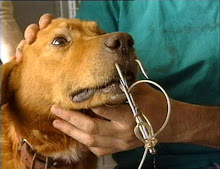
It was bad enough that the poor dogs owner Lashon Parks from Chicago didn't feed her dog and left it to fend for its self outside in the freezing cold it was also beaten by kids with sticks and bats.
Now Lashon Parks is being charged with failure to comply with an animal owners duties and cruelty to animals, I only wish that the police were able to catch the kids too.
All of them need to be locked up for what they did to this poor dog.
Read the article by Rosemary Sobol here.


Saturday, December 10, 2011
Friday, December 9, 2011
International Fund for Animal Welfare Rescued 29 Wolf Dogs
Wolf Dogs Rescued from Chains in Alaska Find New Home in California
The International Fund for Animal Welfare (IFAW – www.ifaw.org) announced today that 29 wolf dogs were rescued from a substandard breeding facility in Palmer, Alaska. Staff and volunteers from the Lockwood Animal Rescue Center (LARC – www.lockwoodarc.org) worked with the Alaska State Special Prosecutor to take possession of the animals living with inadequate veterinary care, food, water and socialization. After two days of veterinary work, the team will transport the wolf dogs more than 3,000 miles to their new home at the Lockwood Animal Rescue Center in Frazier Park, California.
The wolf dogs were being housed individually held by eight-foot chains around their necks. According to reports, the owners fed them only once every four days and, once winter set in, left them to drink out of the soiled fallen snow. Many of the animals exhibited signs of dehydration and open sores around the necks.
"It is absolutely heart-wrenching to see animals living in substandard conditions like this," said Gail A'Brunzo, IFAW Emergency Relief Officer. "In nature, wolves travel 30-50 miles in a day so it's no surprise to see how miserable they were chained-up like that. They are genetically wired to be wild," said A'Brunzo. "This case shows again how thoughtlessness and inadequate care results in terrible suffering for animals."
The rescue effort underway in Alaska involves a team of four veterinarians, an oral surgeon, numerous veterinary technicians and a host of volunteers working day and night to sterilize the wolf-dogs and provide much-needed medical care before the journey south.
"This is LARC's most labor-intensive rescue so far, it has taken weeks of intense work by many people and we can't wait to take these wolf dogs back to our sanctuary and provide them the kind of life they deserve", said Dr. Lorin Linder, LARC President and Co-founder.
Wolf dogs (also known as wolf-dog hybrids) are, like the name implies, part wolf and part dog. Increasingly, people are breeding wolf dogs to be sold as pets. In North America, there are an estimated 300,000 wolf dogs and 1,500 federally regulated pure wolves living in captivity.
"Wolf dogs pose significant behavioral challenges for owners. They can dig, jump or chew out of conventional containment with ease. This sadly results in a large population of unwanted animals who wind up chained in backyards, abandoned or euthanized," said A'Brunzo.
Upon learning of the situation, IFAW stepped-in and provided new enclosures to ensure that all 29 wolf dogs will spend the rest of their days in a suitable environment.
The Lockwood Animal Rescue Center is located on 20 acres in the Los Padres National Forest in Ventura County, California. The 29 rescued wolf dogs will set off from Anchorage, Alaska on Sunday, December 11 and expect to arrive to sanctuary on the 14th. LARC is currently home to 16 wolf dogs. This is the second time IFAW and LARC have collaborated in a rescue; earlier this year four wolf dogs were moved to the sanctuary in California from a bankrupt sanctuary in Texas.
About IFAW (the International Fund for Animal Welfare)
Founded in 1969, IFAW saves animals in crisis around the world. With projects in more than 40 countries, IFAW rescues individual animals, works to prevent cruelty to animals, and advocates for the protection of wildlife and habitats. For more information, visit www.ifaw.org. Follow us on Facebook and Twitter.
SOURCE International Fund for Animal Welfare
The International Fund for Animal Welfare (IFAW – www.ifaw.org) announced today that 29 wolf dogs were rescued from a substandard breeding facility in Palmer, Alaska. Staff and volunteers from the Lockwood Animal Rescue Center (LARC – www.lockwoodarc.org) worked with the Alaska State Special Prosecutor to take possession of the animals living with inadequate veterinary care, food, water and socialization. After two days of veterinary work, the team will transport the wolf dogs more than 3,000 miles to their new home at the Lockwood Animal Rescue Center in Frazier Park, California.
The wolf dogs were being housed individually held by eight-foot chains around their necks. According to reports, the owners fed them only once every four days and, once winter set in, left them to drink out of the soiled fallen snow. Many of the animals exhibited signs of dehydration and open sores around the necks.
"It is absolutely heart-wrenching to see animals living in substandard conditions like this," said Gail A'Brunzo, IFAW Emergency Relief Officer. "In nature, wolves travel 30-50 miles in a day so it's no surprise to see how miserable they were chained-up like that. They are genetically wired to be wild," said A'Brunzo. "This case shows again how thoughtlessness and inadequate care results in terrible suffering for animals."
The rescue effort underway in Alaska involves a team of four veterinarians, an oral surgeon, numerous veterinary technicians and a host of volunteers working day and night to sterilize the wolf-dogs and provide much-needed medical care before the journey south.
"This is LARC's most labor-intensive rescue so far, it has taken weeks of intense work by many people and we can't wait to take these wolf dogs back to our sanctuary and provide them the kind of life they deserve", said Dr. Lorin Linder, LARC President and Co-founder.
Wolf dogs (also known as wolf-dog hybrids) are, like the name implies, part wolf and part dog. Increasingly, people are breeding wolf dogs to be sold as pets. In North America, there are an estimated 300,000 wolf dogs and 1,500 federally regulated pure wolves living in captivity.
"Wolf dogs pose significant behavioral challenges for owners. They can dig, jump or chew out of conventional containment with ease. This sadly results in a large population of unwanted animals who wind up chained in backyards, abandoned or euthanized," said A'Brunzo.
Upon learning of the situation, IFAW stepped-in and provided new enclosures to ensure that all 29 wolf dogs will spend the rest of their days in a suitable environment.
The Lockwood Animal Rescue Center is located on 20 acres in the Los Padres National Forest in Ventura County, California. The 29 rescued wolf dogs will set off from Anchorage, Alaska on Sunday, December 11 and expect to arrive to sanctuary on the 14th. LARC is currently home to 16 wolf dogs. This is the second time IFAW and LARC have collaborated in a rescue; earlier this year four wolf dogs were moved to the sanctuary in California from a bankrupt sanctuary in Texas.
About IFAW (the International Fund for Animal Welfare)
Founded in 1969, IFAW saves animals in crisis around the world. With projects in more than 40 countries, IFAW rescues individual animals, works to prevent cruelty to animals, and advocates for the protection of wildlife and habitats. For more information, visit www.ifaw.org. Follow us on Facebook and Twitter.
SOURCE International Fund for Animal Welfare
Thursday, December 8, 2011
Class Action Lawsuits Against Spot-On Flea And Tick Products
"Spot-On" Flea & Tick Products Alleged to Cause Serious Harm to Dogs and Cats
Pet Pharmaceutical Industry Under Fire in Multiple New Jersey Class Actions
OVER 75,000 COMPLAINTS REPORTED TO EPA ASPCA CONNECTION
Yet another class action was filed this week in federal court in Newark, New Jersey, in the District of New Jersey, against a manufacturer of "Spot-On" Flea and Tick products, neurotoxin pesticides placed directly on the skin of millions of household dogs and cats across the United States.
There is a growing sense of moral outrage and alarming statistics from consumers and pet advocates alike after over 75,000 complaints about the products have been reported to the EPA and nothing has been done to change the advertising, marketing or labeling of the products to alert pet owners of the possible serious side-effects. What's chilling is that those numbers only reflect what has been reported, the actual number of incidents may be much, much higher.
"Spot-On" products generally do not say in their advertising or marketing or even EPA mandated labeling that the products may cause death or other serious side-effects, including paralysis, seizures and ulcerated skin lesions. Consumers are largely unaware of these possibilities when applying the products to their dogs and cats.
Michael Green of Green & Associates, LLC, one of the attorneys that filed the New Jersey class actions, stated, "I've received a number of phone calls from pet owners in the middle of the night, where they are traumatized after their dog or cat has just died in their arms after they placed these pesticides on them. These are innocent pets who were trusting their owner to do the right thing for them. The owners are horrified to think that they gave their pet something that killed them, often in an excruciatingly painful way. Most tragic are those stories where the owner had one pet die only to put it on another pet after being assured there was no connection to the product and have that pet die also. I've gotten a few of those calls too. Unfortunately, the law treats our dogs and cats as just chattel, but if you ask any of these pet owners whose pet died, their dog or cat was a member of their family."
Sold By Major Retailers and Veterinarians
The "Spot-On" tick and flea business is estimated to be an $8 billion a year industry with the products primarily sold by veterinarians and pet store retailers such as PetCo and PetSmart.
This week, PetArmor, a new "Spot-On" flea and tick product for dogs and cats, is being served with the complaint filed against it. PetArmor was launched on April 20, 2011 in a press conference with the ASPCA. The product has been featured in television ads and is sold in major retailer WalMart. It is described by the manufacturer, FidoPharm, as containing the same active ingredients as Frontline, a well-known veterinarian recommended product.
Other "Spot-On" products sued in the class actions in New Jersey, beginning in January 2010, include Frontline, manufactured by Merial Limited, and those manufactured and sold by the other major animal pharmaceutical corporations Sergeant's Pet Care Products, Inc., Hartz Mountain Corporation, Bayer Healthcare, LLC, Farnum Companies, Wellmark International, Inc. and Summit VetPharm, LLC.
"Spot-On" Flea and Tick products are now recommended for virtually all dogs and cats, no matter the locale or specific risk. The Spot-On industry and vets who profit in the billions of dollars have not been called to account as to whether the risk vs. benefits really necessitate that common household pets across this country, and the children and other humans in these households, need to be exposed to these pesticides and neurotoxins 24/7. Studies have shown that the pesticides are detectible on the hands after petting.
EPA Complaints
Over 75,000 complaints to the EPA have been made since 2008 regarding these products including complaints of death and other serious side-effects even without a centralized poison reporting center, something the Humane Society is now calling for. In April of 2009, the Environmental Protection Agency (EPA) issued an advisory and reported that there was a noticeable increase in the number of adverse pet reactions involving the "Spot-On" pesticides which act as neurotoxins.
Nexus Between ASPCA and "Spot-On" Industry
FidoPharm enlisted the aid of the ASPCA in launching an awareness of their "Spot-On" product PetArmor. However, the class action complaint alleges a nexus of relationships between executives of the "Spot-On" product manufacturers and the ASPCA, heretofore known to the public as a non-profit entity established to prevent cruelty to animals.
The ASPCA has selected FidoPharm as its official tick and flea sponsor in its adoption centers and clinics. FidoPharm in turn has donated product and $100,000 to the ASPCA. John Preston, the current chairman of FidoPharm's parent, was the founding executive of Merial, the maker of Frontline.
Dr. Steven R. Hanson, the Senior Vice President and head of the ASPCA's Poison Control Center, where adverse reports of "Spot-On" products may be made, is a former director of Wellmark. Hartz is a corporate donor to the ASPCA and named Dr. Hanson "Veterinarian of the Year." The complaint alleges that calls into the Poison Control Center regarding Hartz "Spot-On" products are redirected to Hartz, allowing Hartz to directly manage any of these adverse events.
In addition, the ASPCA has a for-profit arm, APCC Consulting Services, that provides professional services to animal pharmaceutical corporations, including consultation on product liability. Hartz has been a client of the APCC.
Finally, the ASPCA in a press release, in response to the 2009 EPA advisory regarding "Spot-On" products, quoted Dr. Hanson as stating the products should continue to be used.
The plaintiffs of the class actions allege that the pesticides in the "Spot-On" products cause death, paralysis, seizures and skin lesions to their pets and that these adverse affects are not stated in the advertising or marketing to pet owners.
More information regarding the class action lawsuits filed against FidoPharm and others may be obtained at www.spotoncomplaints.com
Contact: Michael S. Green, Esq., Green & Associates, LLC
Tel: 732-390-0480, Email: green@msgreenlaw.com
SOURCE Green & Associates, LLC
Pet Pharmaceutical Industry Under Fire in Multiple New Jersey Class Actions
OVER 75,000 COMPLAINTS REPORTED TO EPA ASPCA CONNECTION
Yet another class action was filed this week in federal court in Newark, New Jersey, in the District of New Jersey, against a manufacturer of "Spot-On" Flea and Tick products, neurotoxin pesticides placed directly on the skin of millions of household dogs and cats across the United States.
There is a growing sense of moral outrage and alarming statistics from consumers and pet advocates alike after over 75,000 complaints about the products have been reported to the EPA and nothing has been done to change the advertising, marketing or labeling of the products to alert pet owners of the possible serious side-effects. What's chilling is that those numbers only reflect what has been reported, the actual number of incidents may be much, much higher.
"Spot-On" products generally do not say in their advertising or marketing or even EPA mandated labeling that the products may cause death or other serious side-effects, including paralysis, seizures and ulcerated skin lesions. Consumers are largely unaware of these possibilities when applying the products to their dogs and cats.
Michael Green of Green & Associates, LLC, one of the attorneys that filed the New Jersey class actions, stated, "I've received a number of phone calls from pet owners in the middle of the night, where they are traumatized after their dog or cat has just died in their arms after they placed these pesticides on them. These are innocent pets who were trusting their owner to do the right thing for them. The owners are horrified to think that they gave their pet something that killed them, often in an excruciatingly painful way. Most tragic are those stories where the owner had one pet die only to put it on another pet after being assured there was no connection to the product and have that pet die also. I've gotten a few of those calls too. Unfortunately, the law treats our dogs and cats as just chattel, but if you ask any of these pet owners whose pet died, their dog or cat was a member of their family."
Sold By Major Retailers and Veterinarians
The "Spot-On" tick and flea business is estimated to be an $8 billion a year industry with the products primarily sold by veterinarians and pet store retailers such as PetCo and PetSmart.
This week, PetArmor, a new "Spot-On" flea and tick product for dogs and cats, is being served with the complaint filed against it. PetArmor was launched on April 20, 2011 in a press conference with the ASPCA. The product has been featured in television ads and is sold in major retailer WalMart. It is described by the manufacturer, FidoPharm, as containing the same active ingredients as Frontline, a well-known veterinarian recommended product.
Other "Spot-On" products sued in the class actions in New Jersey, beginning in January 2010, include Frontline, manufactured by Merial Limited, and those manufactured and sold by the other major animal pharmaceutical corporations Sergeant's Pet Care Products, Inc., Hartz Mountain Corporation, Bayer Healthcare, LLC, Farnum Companies, Wellmark International, Inc. and Summit VetPharm, LLC.
"Spot-On" Flea and Tick products are now recommended for virtually all dogs and cats, no matter the locale or specific risk. The Spot-On industry and vets who profit in the billions of dollars have not been called to account as to whether the risk vs. benefits really necessitate that common household pets across this country, and the children and other humans in these households, need to be exposed to these pesticides and neurotoxins 24/7. Studies have shown that the pesticides are detectible on the hands after petting.
EPA Complaints
Over 75,000 complaints to the EPA have been made since 2008 regarding these products including complaints of death and other serious side-effects even without a centralized poison reporting center, something the Humane Society is now calling for. In April of 2009, the Environmental Protection Agency (EPA) issued an advisory and reported that there was a noticeable increase in the number of adverse pet reactions involving the "Spot-On" pesticides which act as neurotoxins.
Nexus Between ASPCA and "Spot-On" Industry
FidoPharm enlisted the aid of the ASPCA in launching an awareness of their "Spot-On" product PetArmor. However, the class action complaint alleges a nexus of relationships between executives of the "Spot-On" product manufacturers and the ASPCA, heretofore known to the public as a non-profit entity established to prevent cruelty to animals.
The ASPCA has selected FidoPharm as its official tick and flea sponsor in its adoption centers and clinics. FidoPharm in turn has donated product and $100,000 to the ASPCA. John Preston, the current chairman of FidoPharm's parent, was the founding executive of Merial, the maker of Frontline.
Dr. Steven R. Hanson, the Senior Vice President and head of the ASPCA's Poison Control Center, where adverse reports of "Spot-On" products may be made, is a former director of Wellmark. Hartz is a corporate donor to the ASPCA and named Dr. Hanson "Veterinarian of the Year." The complaint alleges that calls into the Poison Control Center regarding Hartz "Spot-On" products are redirected to Hartz, allowing Hartz to directly manage any of these adverse events.
In addition, the ASPCA has a for-profit arm, APCC Consulting Services, that provides professional services to animal pharmaceutical corporations, including consultation on product liability. Hartz has been a client of the APCC.
Finally, the ASPCA in a press release, in response to the 2009 EPA advisory regarding "Spot-On" products, quoted Dr. Hanson as stating the products should continue to be used.
The plaintiffs of the class actions allege that the pesticides in the "Spot-On" products cause death, paralysis, seizures and skin lesions to their pets and that these adverse affects are not stated in the advertising or marketing to pet owners.
More information regarding the class action lawsuits filed against FidoPharm and others may be obtained at www.spotoncomplaints.com
Contact: Michael S. Green, Esq., Green & Associates, LLC
Tel: 732-390-0480, Email: green@msgreenlaw.com
SOURCE Green & Associates, LLC
Wednesday, December 7, 2011
Internet's Worst Puppy Mill Exposed
Arthur E. Benjamin Founder & President of American Dog Rescue Responds to NBC TODAY Show Exposing Puppy Mills Worst Offenders
Executive and philanthropist aids in creating urgent awareness to Americans to stop puppy mills via the internet
Delray Beach Executive and philanthropist Arthur E. Benjamin and American Dog Rescue (ADR) also headquartered in Dallas and Salt Lake City, with various projects spread coast-to-coast, quickly reacted from Fort Lauderdale to this morning's TODAY Show Segment where the Humane Society of the United States exposed retail establishments whose inventory is supplied by puppy mills. Drawing attention to America and its worst offending states, the program highlights the unfair treatment of animals sold throughout retail stores and several hundred internet websites.
While revealing the heartbreaking deception behind puppy mill dogs, ADR plans to implement massive efforts uncovered by the HSUS in cracking down on an industry which perpetuates a cycle of animal cruelty. The much needed spotlight was made possible by HSUS and Benjamin continues to emphasize that Congress needs to act immediately. Divulging the grim connection between puppy mills and pet stores and all retail outlets throughout the United States is the focus of concern that keep puppy mills thriving.
The Humane Society of the United States released the results of its 3-month-long investigation into Purebred Breeders LLC, thought to be the nation's largest online seller of puppies. The investigation highlighted the connection between Purebred Breeders and inhumane commercial breeding facilities known as puppy mills. Undercover HSUS investigators obtained photographs and video footage of several large-scale commercial puppy mills that supply dogs to Purebred Breeders for re-sale. This footage reveals dogs in stacked wire cages, empty water bowls, excessive build-up of feces under cages, and other unsanitary conditions typical of puppy mills.
The HSUS investigation found that Purebred Breeders owns nearly 800 Web domains designed to mislead consumers into believing that they are dealing with local breeders when they shop online for a puppy. Whistleblowers working for the company told HSUS investigators that the company sells approximately 20,000 puppies every year, using hard-sell, deceptive tactics encouraged by company executives. Puppies purchased through Purebred Breeders are never seen by sales personnel even though they routinely guarantee the health of these animals who are often flown long distances directly from the breeding facility to the consumer.
"It's devastating to know that we live in a country that allows these establishments to continue to feed our economy at the expense of defenseless animals," said Benjamin. "ADR works tirelessly to stop businesses that contribute to puppy mills and the suffering of countless dogs, and bring awareness to states like Florida who are among the worst offending states."
With an estimated 10,000 puppy mill facilities in the U.S., hundreds of thousands of dogs are bred and housed in unsanitary conditions with little or no medical care, exercise, socialization, or human interaction; countless animals have died. Benjamin's mission remains to educate the American people not to buy, but to adopt a pet.
For more information about the ADR efforts throughout the United States and worldwide, please visit www.americandogrescue.org.
American Dog Rescue (ADR) is a tax-exempt, non-profit 501(c)(3) organization committed to finding a home for every adoptable dog in the United States. American Dog Rescue is committed to placing healthy dogs in permanent homes that are the right fit for the animal and its family. Donations can be made by visiting www.americandogrescue.org/donate or calling (888) 262-4753.
SOURCE American Dog Rescue
Executive and philanthropist aids in creating urgent awareness to Americans to stop puppy mills via the internet
Delray Beach Executive and philanthropist Arthur E. Benjamin and American Dog Rescue (ADR) also headquartered in Dallas and Salt Lake City, with various projects spread coast-to-coast, quickly reacted from Fort Lauderdale to this morning's TODAY Show Segment where the Humane Society of the United States exposed retail establishments whose inventory is supplied by puppy mills. Drawing attention to America and its worst offending states, the program highlights the unfair treatment of animals sold throughout retail stores and several hundred internet websites.
While revealing the heartbreaking deception behind puppy mill dogs, ADR plans to implement massive efforts uncovered by the HSUS in cracking down on an industry which perpetuates a cycle of animal cruelty. The much needed spotlight was made possible by HSUS and Benjamin continues to emphasize that Congress needs to act immediately. Divulging the grim connection between puppy mills and pet stores and all retail outlets throughout the United States is the focus of concern that keep puppy mills thriving.
The Humane Society of the United States released the results of its 3-month-long investigation into Purebred Breeders LLC, thought to be the nation's largest online seller of puppies. The investigation highlighted the connection between Purebred Breeders and inhumane commercial breeding facilities known as puppy mills. Undercover HSUS investigators obtained photographs and video footage of several large-scale commercial puppy mills that supply dogs to Purebred Breeders for re-sale. This footage reveals dogs in stacked wire cages, empty water bowls, excessive build-up of feces under cages, and other unsanitary conditions typical of puppy mills.
The HSUS investigation found that Purebred Breeders owns nearly 800 Web domains designed to mislead consumers into believing that they are dealing with local breeders when they shop online for a puppy. Whistleblowers working for the company told HSUS investigators that the company sells approximately 20,000 puppies every year, using hard-sell, deceptive tactics encouraged by company executives. Puppies purchased through Purebred Breeders are never seen by sales personnel even though they routinely guarantee the health of these animals who are often flown long distances directly from the breeding facility to the consumer.
"It's devastating to know that we live in a country that allows these establishments to continue to feed our economy at the expense of defenseless animals," said Benjamin. "ADR works tirelessly to stop businesses that contribute to puppy mills and the suffering of countless dogs, and bring awareness to states like Florida who are among the worst offending states."
With an estimated 10,000 puppy mill facilities in the U.S., hundreds of thousands of dogs are bred and housed in unsanitary conditions with little or no medical care, exercise, socialization, or human interaction; countless animals have died. Benjamin's mission remains to educate the American people not to buy, but to adopt a pet.
For more information about the ADR efforts throughout the United States and worldwide, please visit www.americandogrescue.org.
American Dog Rescue (ADR) is a tax-exempt, non-profit 501(c)(3) organization committed to finding a home for every adoptable dog in the United States. American Dog Rescue is committed to placing healthy dogs in permanent homes that are the right fit for the animal and its family. Donations can be made by visiting www.americandogrescue.org/donate or calling (888) 262-4753.
SOURCE American Dog Rescue
Tuesday, December 6, 2011
P&G Voluntarily Recalls One Lot Of Iams ProActive Health Smart Puppy Dry Dog Food
P&G Voluntarily Recalls One Production Lot of Dry Dog Food
The Procter & Gamble Company (P&G) has voluntarily retrieved a single production lot of dry dog food due to aflatoxin levels that were detected above the acceptable limit. This product has already been retrieved from store shelves. No illnesses have been reported in association with this production lot to date, and no other Iams pet food products are involved.
Product affected by this announcement:Product Name
Version
Iams ProActive Health Smart Puppy dry dog food with Use By or Expiration Dates of February 5 or February 6, 2013
7.0 lb bag
Code Date 12784177I6
UPC Code 1901402305
8.0 lb bag
Code Date 12794177D2
Code Date 12794177D3
UPC Code 1901410208
17.5 lb bag
Code Date 12794177K1
Code Date 12794177K2
UPC Code 1901401848
The affected product lot was distributed to a limited number of retailers located in the eastern United States (AL, CT, DE, FL, GA, LA, MD, ME, MS, NC, NH, NJ, NY, PA, SC, VA). These retailers have already removed this product from store shelves. No other dry dog food, dry cat food, dog or cat canned food, biscuits/treats or supplements are affected by this announcement.
While no health effects related to this product have been reported, P&G retrieved this product as a precautionary measure. Consumers who purchased the product listed should stop using the product and discard it and contact Iams at the number below for a replacement voucher. Aflatoxin is a naturally occurring by-product from the growth of Aspergillus flavus and can be harmful to pets if consumed in significant quantities. Pets which have consumed this product and exhibit symptoms of illness including sluggishness or lethargy combined with a reluctance to eat, vomiting, yellowish tint to the eyes or gums, or diarrhea should be seen by a veterinarian.
For further information or a product replacement or refund contact P&G toll-free at 866-908-1569
(Monday – Friday, 9:00 AM to 6:00 PM EST) or www.iams.com.
The Procter & Gamble Company (P&G) has voluntarily retrieved a single production lot of dry dog food due to aflatoxin levels that were detected above the acceptable limit. This product has already been retrieved from store shelves. No illnesses have been reported in association with this production lot to date, and no other Iams pet food products are involved.
Product affected by this announcement:Product Name
Version
Iams ProActive Health Smart Puppy dry dog food with Use By or Expiration Dates of February 5 or February 6, 2013
7.0 lb bag
Code Date 12784177I6
UPC Code 1901402305
8.0 lb bag
Code Date 12794177D2
Code Date 12794177D3
UPC Code 1901410208
17.5 lb bag
Code Date 12794177K1
Code Date 12794177K2
UPC Code 1901401848
The affected product lot was distributed to a limited number of retailers located in the eastern United States (AL, CT, DE, FL, GA, LA, MD, ME, MS, NC, NH, NJ, NY, PA, SC, VA). These retailers have already removed this product from store shelves. No other dry dog food, dry cat food, dog or cat canned food, biscuits/treats or supplements are affected by this announcement.
While no health effects related to this product have been reported, P&G retrieved this product as a precautionary measure. Consumers who purchased the product listed should stop using the product and discard it and contact Iams at the number below for a replacement voucher. Aflatoxin is a naturally occurring by-product from the growth of Aspergillus flavus and can be harmful to pets if consumed in significant quantities. Pets which have consumed this product and exhibit symptoms of illness including sluggishness or lethargy combined with a reluctance to eat, vomiting, yellowish tint to the eyes or gums, or diarrhea should be seen by a veterinarian.
For further information or a product replacement or refund contact P&G toll-free at 866-908-1569
(Monday – Friday, 9:00 AM to 6:00 PM EST) or www.iams.com.
Monday, December 5, 2011
I'm Against Puppy Mills, But To Eliminate All Breeding
"Animal Rights" Activists Aim to Eliminate All Dog and Cat Breeding in Texas
Their crosshairs are on purposeful breeding and sales of purebred dogs and cats in the U.S. as the "first step" of their extreme agenda.
Under the guise of emotional rhetoric to eliminate "Puppymills," Texas HB 1451 was pushed through the 2011 Texas Legislative Session by senior ranking members Rep. Senfronia Thompson and Senator John Whitmire and signed into law by Governor Rick Perry June 17. The bill mandates Texas dog and cat breeders with more than 10 Intact Female Animals (over 6 months) be licensed and comply with federal USDA regulations for minimum standards with requirements impossible to meet in a home environment. The newly appointed Texas Department of Licensing & Regulation's Breeders License Committee is tasked with writing more rules with enforcement to begin September 1, 2012.
Bill proponents Humane Society of the United States (HSUS), Texas Humane Legislation Network and ASPCA held a joint Lobby Day at the Capitol last legislative session. For HSUS President Wayne Pacelle this is a national agenda to legislate pet ownership out of existence. He stated as much in May of 1993: "One generation and out. We have no problem with the extinction of domestic animals. They are creations of human selective breeding." HSUS operates no animal shelters and only 1% of their $126 million budget goes to local shelters. Texas Humane Legislation Network President Cile Holloway reminded members of their goal to "Get anything passed and come back later."
Senator Whitmire says he's bringing HB 1451 back for the next Legislative Session.
HB 1451 goes far beyond reasonable requirements for humane care and confinement of animals -- exceeding existing standards for city pounds, nonprofit animal shelters and veterinary clinics. The bill states: "The standards adopted must at a minimum meet federal regulations for humane handling, care, treatment, and transportation set forth in 9C.F.R. Part 3, Subpart A in the Animal Welfare Act." HSUS failed to get a federal bill passed in 2005 to bring every dog and cat breeder in the U.S. under the Animal Welfare Act and vowed to take their campaign to the states.
Responsible Pet Owners Alliance, American Kennel Club, and many other animal welfare organizations opposed HB 1451 which authorizes third party inspectors' warrantless entry to homes, unannounced inspections without owner on premises, criminal background checks, payment to "snitches" for anonymous information, excessive license fees to cover all administration and enforcement costs, public listing of breeder licensed facilities and more. Public listing of licensed breeders will undoubtedly lead to harassment from "animal rights" extremists who harbor a deep hatred for all dog and cat shows and hobby breeders.
SOURCE: Responsible Pet Owners Alliance is the leading provider of information and assistance concerning animal welfare and related public health issues, taking whatever steps necessary to preserve our historic relationship with animals. To receive Texas RPOA E-News, email rpoa@texas.net.
CONTACT: Mary Beth Duerler
Executive Director
(210) 822-6763
rpoa@texas.net
DONATE: www.rpoatexasoutreach.org
Their crosshairs are on purposeful breeding and sales of purebred dogs and cats in the U.S. as the "first step" of their extreme agenda.
Under the guise of emotional rhetoric to eliminate "Puppymills," Texas HB 1451 was pushed through the 2011 Texas Legislative Session by senior ranking members Rep. Senfronia Thompson and Senator John Whitmire and signed into law by Governor Rick Perry June 17. The bill mandates Texas dog and cat breeders with more than 10 Intact Female Animals (over 6 months) be licensed and comply with federal USDA regulations for minimum standards with requirements impossible to meet in a home environment. The newly appointed Texas Department of Licensing & Regulation's Breeders License Committee is tasked with writing more rules with enforcement to begin September 1, 2012.
Bill proponents Humane Society of the United States (HSUS), Texas Humane Legislation Network and ASPCA held a joint Lobby Day at the Capitol last legislative session. For HSUS President Wayne Pacelle this is a national agenda to legislate pet ownership out of existence. He stated as much in May of 1993: "One generation and out. We have no problem with the extinction of domestic animals. They are creations of human selective breeding." HSUS operates no animal shelters and only 1% of their $126 million budget goes to local shelters. Texas Humane Legislation Network President Cile Holloway reminded members of their goal to "Get anything passed and come back later."
Senator Whitmire says he's bringing HB 1451 back for the next Legislative Session.
HB 1451 goes far beyond reasonable requirements for humane care and confinement of animals -- exceeding existing standards for city pounds, nonprofit animal shelters and veterinary clinics. The bill states: "The standards adopted must at a minimum meet federal regulations for humane handling, care, treatment, and transportation set forth in 9C.F.R. Part 3, Subpart A in the Animal Welfare Act." HSUS failed to get a federal bill passed in 2005 to bring every dog and cat breeder in the U.S. under the Animal Welfare Act and vowed to take their campaign to the states.
Responsible Pet Owners Alliance, American Kennel Club, and many other animal welfare organizations opposed HB 1451 which authorizes third party inspectors' warrantless entry to homes, unannounced inspections without owner on premises, criminal background checks, payment to "snitches" for anonymous information, excessive license fees to cover all administration and enforcement costs, public listing of breeder licensed facilities and more. Public listing of licensed breeders will undoubtedly lead to harassment from "animal rights" extremists who harbor a deep hatred for all dog and cat shows and hobby breeders.
SOURCE: Responsible Pet Owners Alliance is the leading provider of information and assistance concerning animal welfare and related public health issues, taking whatever steps necessary to preserve our historic relationship with animals. To receive Texas RPOA E-News, email rpoa@texas.net.
CONTACT: Mary Beth Duerler
Executive Director
(210) 822-6763
rpoa@texas.net
DONATE: www.rpoatexasoutreach.org
Subscribe to:
Posts (Atom)